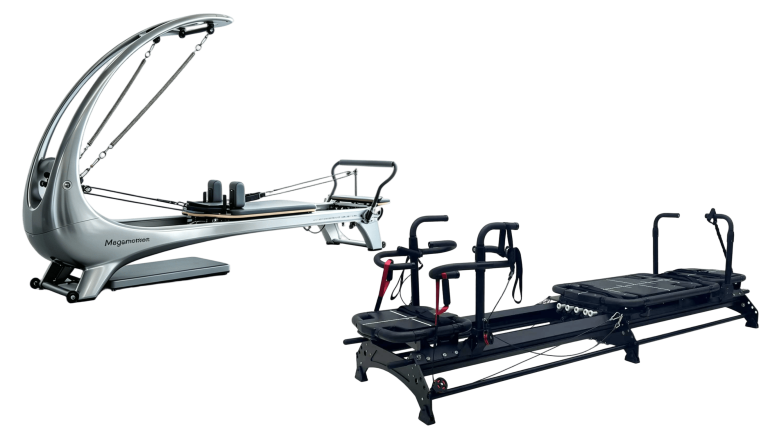

A Pilates reformer is a long-term investment for both professional studios and home training. Proper maintenance extends its service life and ensures a smooth, safe, and comfortable workout experience. With regular care, your reformer will remain in excellent condition for years.
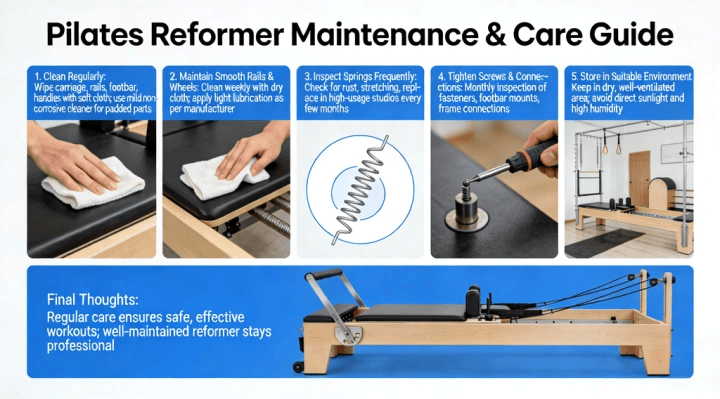
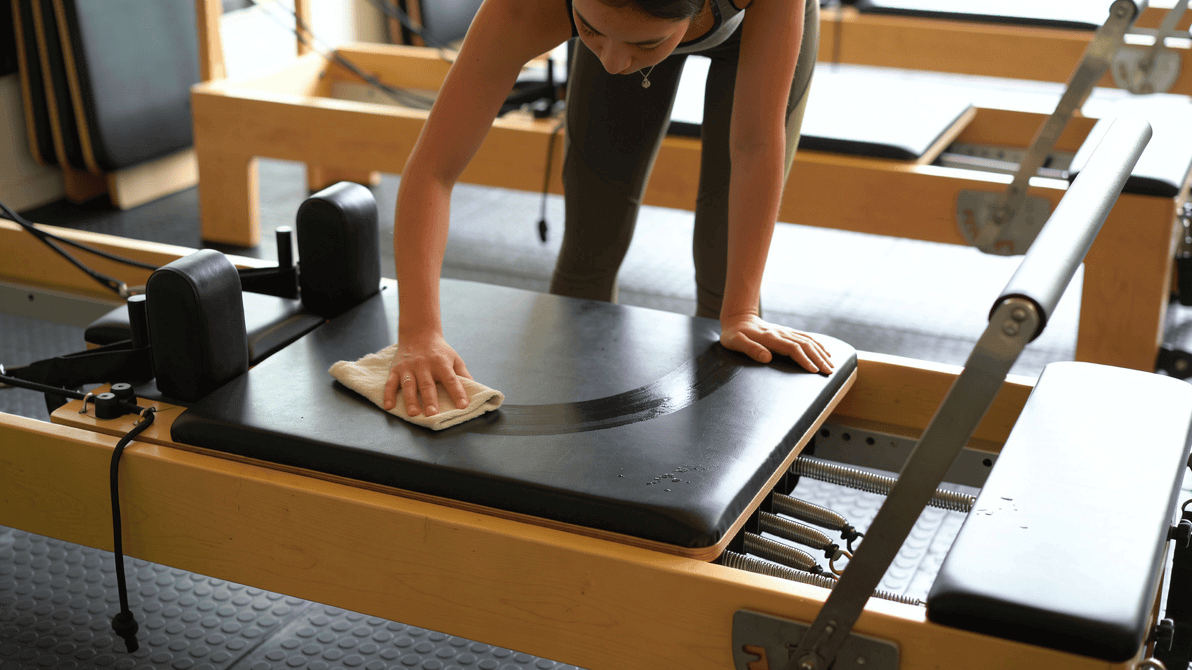
Pilates reformers are in direct contact with the body, so daily cleaning is essential. After each use, wipe the carriage, rails, footbar, and handles with a soft cloth.
Avoid harsh chemicals or alcohol-based cleaners, as they can damage leather, wood, and aluminum surfaces. Use a mild, non-corrosive cleaner for padded parts to keep upholstery soft and durable.
Smooth carriage movement is key to a quality Pilates workout. Dust and debris on the rails can affect performance over time.
Check and clean rails and wheels weekly with a dry cloth. If advised by the manufacturer, apply light lubrication to reduce friction and wear.
Springs provide resistance and ensure safety. Regularly check for rust, stretching, or reduced tension.
In high-usage studios, inspect springs every few months and replace them when needed to maintain consistent resistance and prevent injuries.
Bolts and joints may loosen with frequent use. Conduct a monthly inspection of all fasteners, footbar mounts, and frame connections to keep the reformer stable and quiet.
Tightening loose parts eliminates noise and preserves structural stability.
Keep your reformer in a dry, well-ventilated area away from direct sunlight and high humidity.
Moisture can corrode metal parts, while prolonged sun exposure may fade upholstery and damage wooden components. Proper storage preserves appearance and performance.
Caring for your Pilates reformer is simple yet important. Regular cleaning, inspections, and proper storage will support safe, effective, and comfortable workouts for years to come.
A well-maintained reformer stays professional in appearance and delivers the smooth, controlled movement essential to Pilates training.